
Where you sleep shapes a hiking trip almost as much as where you walk. A great night’s rest makes the next day’s miles feel easy, while a cold, noisy or poorly planned camp can sour the whole journey. The good news is that there are several ways to spend the night on or near a trail, each with its own trade-offs in cost, comfort, weight and flexibility. Here is how the main options compare, so you can choose the one that suits your trip.
Backcountry Camping
Camping in the backcountry gives you the most freedom and the deepest connection with the landscape. You carry your shelter, sleeping bag and pad, and you wake up where you want to be. It is also usually the cheapest option once you own the gear.
The trade-off is weight and responsibility. You are managing your own water, food storage, weather protection and waste. Many areas require permits or limit camping to designated sites, so check the rules for your route. Where you can choose, camp on durable surfaces such as established sites, rock or dry grass, and stay well away from water sources, commonly at least two hundred feet, to protect both the stream and yourself from flooding and condensation.
Frontcountry and Campground Camping
Campgrounds near trailheads are a gentler introduction. You usually get a flat pitch, a place to park, toilets and sometimes drinking water. They are well suited to beginners, families and day-hike-based trips where you return to the same site each evening.
You give up some solitude, and popular campgrounds often need advance reservations, particularly in summer. The upside is that you can carry less, use a bigger tent and keep your car as a safe store for food and gear. Check local rules about food storage, because wildlife near campgrounds can become bold.
Mountain Huts and Hostels
In many mountain regions, huts and refuges offer bunks, a roof and often meals, which means you can hike with a much lighter pack. This style of hiking is popular on classic long-distance routes because it removes the need to carry a tent, stove and several days of food.
Huts do require planning. Beds can fill quickly in peak season, so reserve early, and be prepared for shared dorms and early lights-out. Bring earplugs, a lightweight sleeping liner if the hut requires one and a headlamp for navigating at night without waking others. Opening seasons and services vary, so confirm details before you commit to an itinerary.
Lodges, Inns and Guesthouses
If your idea of a hike includes a hot shower and a proper bed, lodge-to-lodge trips are a rewarding option. Some trails are designed around villages and guesthouses spaced a day’s walk apart, making it possible to carry only a small day pack.
The cost is higher, and your route becomes tied to where rooms are available. That can limit flexibility if weather delays you, so build in spare days and keep cancellation terms in mind. For many people, the comfort is well worth it, especially on trips that last more than a few days or for hikers who want to enjoy the scenery without the burden of heavy gear.
Cabins and Shelters
Basic trail shelters and rental cabins sit somewhere in between. They offer cover from rain and wind with little or no service. Some are first come, first served, while others require booking. Always carry a backup plan, because a shelter can be full or unsuitable when you arrive, and bring your own shelter or sleeping gear if the rules suggest it.
Choosing Based on Your Trip
Use a few questions to narrow your options:
- How much do you want to carry? Lodges and huts reduce weight; camping adds it.
- What is your budget? Camping is typically cheapest; lodges cost the most.
- How flexible do you need to be? Camping allows changes of plan; booked beds fix your schedule.
- What is the season? Cold, wet or snowy conditions favour solid shelter, while summer allows lighter options.
- Who is coming? Children and first-timers often enjoy the security of a campground or hut.
If you want help comparing options in more detail, Hiking Backpack Hub has practical guides that help you decide what to carry for each style of accommodation.
Sleep Better Wherever You Are
Quality sleep is a skill. A few habits make a big difference:
- Insulate from the ground. A sleeping pad with suitable insulation matters as much as your sleeping bag, because the ground steals heat.
- Choose your spot well. Look for flat ground, shelter from wind and a position away from dead branches and drainage paths.
- Eat and drink before bed. A warm drink and a snack help your body generate heat overnight.
- Keep your gear organised. Place your headlamp, water and essentials where you can reach them in the dark.
- Change into dry clothes. Keeping a set of dry sleep layers helps you warm up and recover.
Book Early and Read the Rules
Popular campsites, huts and lodges fill early, sometimes months in advance. Check booking windows as soon as you pick your dates, and keep proof of your reservation or permit accessible offline. Understand cancellation policies, check-in times and any required equipment. A phone call or email to the provider often answers questions the website does not.
Whatever you choose, follow Leave No Trace principles. Pack out all rubbish, dispose of waste properly, keep noise down and respect other guests and local wildlife.
Finding the Right Place
There is no single best way to sleep on a hike. Backcountry camping rewards independence, campgrounds offer ease, huts reduce weight and lodges deliver comfort. The right choice depends on your priorities, your budget and the season. To compare options and find ideas for your next trip, browse the places to stay guides, which help you match accommodation to the kind of hiking you want to do. Pick the style that fits, book ahead where you need to and enjoy a good night’s sleep at the end of every walking day.
About the author: Dana Okoro writes about trail preparation and backpacking at Hiking Backpack Hub. Read more of their work on the author page.
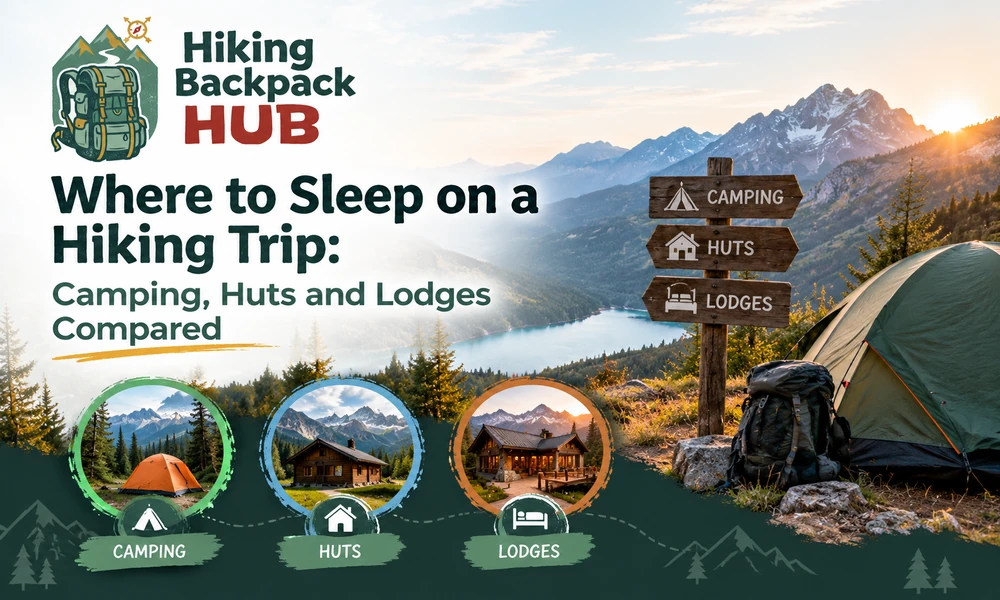
Where to Sleep on a Hiking Trip: Camping, Huts and Lodges Compared